
Top 5 Lower Trapezius Exercises to Reduce Neck and Shoulder Pain in Fort Worth

If you constantly feel tightness between your neck and shoulders, the problem is not always that your upper traps are "too tight." In many cases, the real issue is that your lower trapezius muscles are weak or underactive.

The lower trapezius helps stabilize your shoulder blades, improve posture, and reduce excessive strain on your neck muscles. When these muscles aren't doing their job, your upper traps and levator scapulae compensate—often leading to stiffness, headaches, shoulder impingement, and chronic neck pain.
For people in Fort Worth who spend long hours at a desk, drive frequently, or train in the gym, strengthening the lower traps can make a significant difference.
Why the Lower Trapezius Matters
Your trapezius has three sections:
Upper fibers elevate the shoulders.
Middle fibers retract the shoulder blades.
Lower fibers pull the shoulder blades downward and help rotate them upward during overhead movements.
When the lower traps are weak:
Your shoulders round forward.
Your upper traps become overactive.
Your head shifts forward.
Your neck muscles work harder than they should.
The result is increased tension, reduced shoulder mobility, and recurring pain.
While lower trap exercises aren't a universal "cure" for every case of neck or shoulder pain, they can address one of the most common underlying movement problems.
The Top 5 Lower Trap Exercises
1. Prone Y Raise
Lie face down on a bench or stability ball with your arms overhead in a "Y" position.

How to do it:
Keep your thumbs pointing toward the ceiling.
Pull your shoulder blades down and back.
Lift your arms without shrugging.
Pause for 2–3 seconds at the top.
Sets and reps: 2–3 sets of 10–15 repetitions.
Why it works: This exercise directly targets the lower trap while minimizing upper trap compensation.
2. Wall Slide

Stand with your back against a wall and your forearms resting on it.
How to do it:
Keep your ribs down.
Slide your arms overhead slowly.
Focus on moving your shoulder blades upward without shrugging.
Sets and reps: 2–3 sets of 8–12 repetitions.
Why it works: Wall slides improve shoulder mobility and train the lower traps to coordinate with the serratus anterior.
3. Face Pull
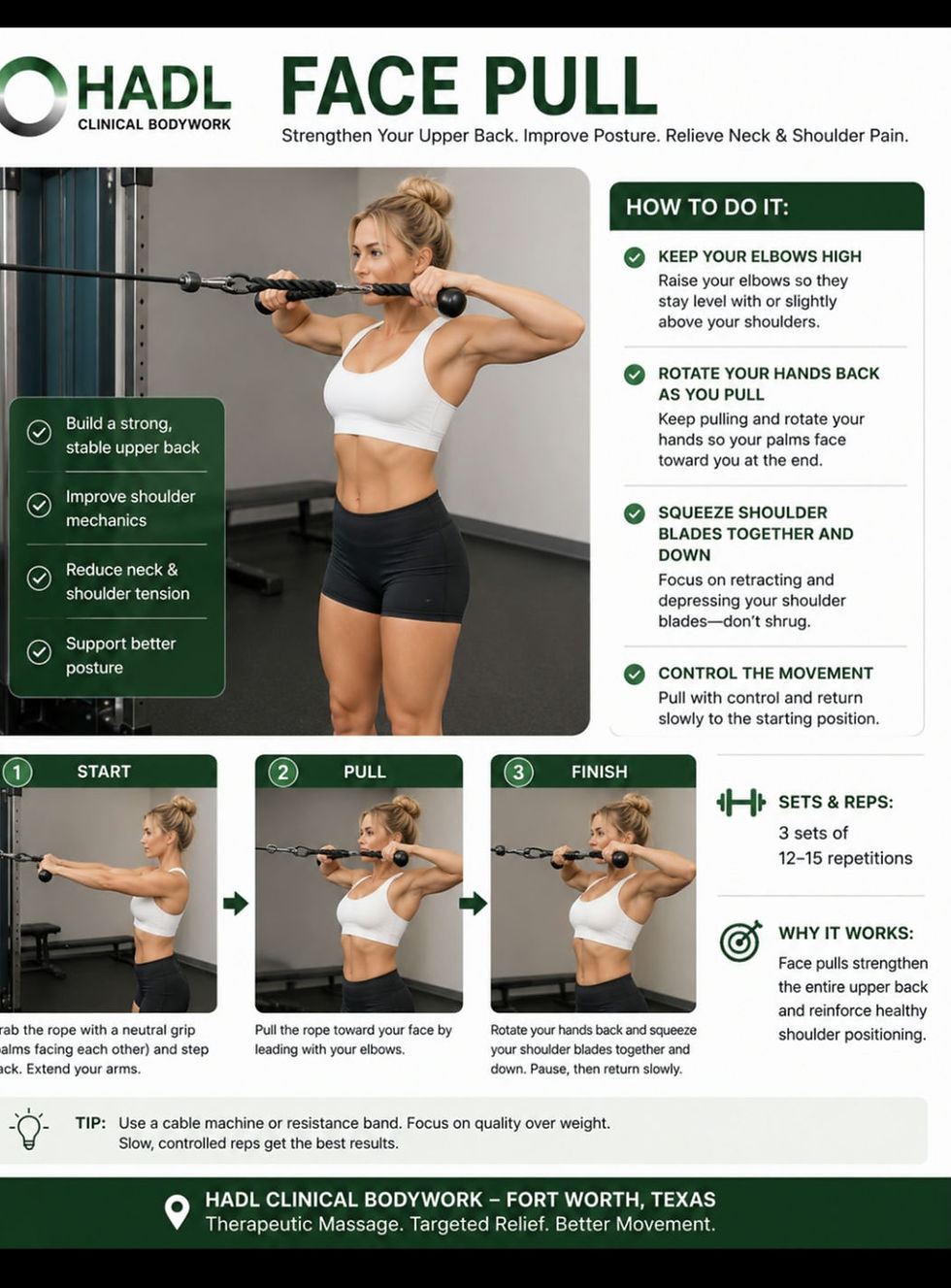
Using a cable machine or resistance band, pull the handles toward your face.
How to do it:
Keep your elbows high.
Rotate your hands back as you pull.
Finish by squeezing your shoulder blades together and down.
Sets and reps: 3 sets of 12–15 repetitions.
Why it works: Face pulls strengthen the entire upper back and reinforce healthy shoulder positioning.
4. Scapular Pull-Up

Hang from a pull-up bar with straight elbows.
How to do it:
Without bending your arms, pull your shoulder blades down.
Lift your body slightly.
Lower slowly.
Sets and reps: 2–3 sets of 8–10 repetitions.
Why it works: This exercise teaches proper scapular depression and activates the lower traps.
5. Resistance Band Pull-Apart

Hold a resistance band at shoulder height.
How to do it:
Pull the band apart while keeping your shoulders down.
Avoid arching your lower back.
Return slowly.
Sets and reps: 2–3 sets of 15–20 repetitions.
Why it works: Band pull-aparts strengthen the muscles that oppose rounded shoulders and improve posture.
How Lower Trap Strengthening Helps

Neck and Shoulder Pain
Consistent lower trap training can:
Reduce upper trap overuse
Improve posture and shoulder mechanics
Decrease stress on the neck
Increase overhead mobility
Support better breathing mechanics
Reduce tension headaches related to muscle imbalance
For the best results, combine strengthening exercises with mobility work, ergonomic changes, and hands-on treatment.
When Exercise Alone Isn't Enough
If you have persistent pain, numbness, tingling, or symptoms that worsen with activity, an evaluation is important. Neck and shoulder pain can also stem from joint restrictions, rotator cuff injuries, cervical disc issues, or nerve irritation.
Clinical massage therapy and bodywork can help reduce muscle guarding, improve mobility, and make corrective exercises more effective.
If you're looking for massage therapy in Fort Worth for chronic neck and shoulder pain, combining targeted bodywork with a lower trap strengthening program often produces better long-term results than massage alone.


Comments